Tuesday, January 24, 2017

mefo bills schacht

Hjalmar Schacht, Mefo Bills and the Restoration of the German Economy 1933-1939
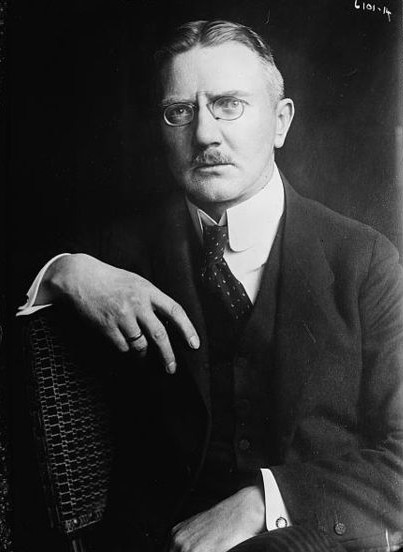
Hjalmar_Schacht
So, I was doing a bit of that aimless reading one so often does on the internet and I came across the transcript from the trial of Hjalmar Schacht at Nuremberg after the war. Schacht was, of course, the chief architect of Nazi economic policy and the inventor of the infamous Mefo bill, which we shall discuss in more detail below. The transcript is fascinating because it includes a nice overview of Nazi economic policy during the war and the years of rearmament.
I’ll give some context first of all. As is well-known, after WWI the allies had banned the defeated Germany from having a size-able standing army. In the 1930s, however, after the election of Hitler in 1933 the allies moved more and more to appease the Nazi regime and effectively looked the other way as the Nazis rearmed. But rearmament still had to be done under something of a cloak of darkness. One of the restrictions on Germany was that the government was only allowed to borrow 100m Reichsmark from the Reichsbank (the German central bank at the time). With such a budget limit in place Germany could not obtain the funds needed to rearm. So Hitler turned to Schacht who was, with the notable exception of Albert Speer, one of the only higher-ups in Germany at the time with any degree of intelligence.
The first step, of course, was to obtain financing. In order to do this Schacht introduced the Mefo bill which the Nuremberg prosecution described as such,
Transactions in “mefo” bills worked as follows: “mefo” bills were drawn by armament contractors and accepted by a limited liability company called the Metallurgische Forschungsgesellschaft, m.b.H. (MEFO). This company was merely a dummy organization; it had a nominal capital of only one million Reichsmarks. “Mefo” bills ran for six months, but provision was made for extensions running consecutively for three months each. The drawer could present his “mefo” bills to any German bank for discount at any time, and these banks, in turn, could rediscount the bills at the Reichsbank at any time within the last three months of their earliest maturity.
It was not a terribly complex plan. The military contractors were paid in bills of exchange issued by a shell company. These contractors would then take the bills to a private German bank which would then gladly turn over cash to the holder because they knew that they could then hand the Mefo bill to the Reichsbank which would in turn convert it into cash using their money-issuing powers.
The resulting spending resulted in the German economic boom that took place under Hitler. Here is a nice graph from Erwin Mahe that compares the growth and inflation in Nazi Germany to that in the Netherlands in those dark years:
Nazi GDP inflation
This is an incredible story from an economic point-of-view. After Hitler’s election in 1933 the Nazis were able to sustain between about 8-10% GDP for five years running with an inflation rate that would be the envy of the Bank of England and other inflation-targeters today. Now, we know how this growth was financed — that is, by money issuance — but how was it achieved? Here we turn back to the Nuremberg transcripts.
Well, first of all the capital markets were brought firmly under control so that rearmament became priority number one. The prosecution explains,
By a series of controls, they reduced to the minimum consistent with their rearmament program, all private issues which might have competed with Government issues for the limited funds in the capital market. Thus, the capital market was, in effect, pre-empted for Government issues.
Next Schacht seized control over the foreign exchange market to ensure that only those goods that were truly needed for the war machine — such as raw materials — were imported. This was referred to as the ‘New Plan’.
There were three main features of the “New Plan” as devised by Schacht: (1) restriction of the demand for such foreign exchange as would be used for purposes unrelated to the conspirators’ rearmament program; (2) increase of the supply of foreign exchange, as a means of paying for essential imports which could not otherwise be acquired; and (3) clearing agreements and other devices obviating the need for foreign exchange… These agencies, which were under Schacht’s control as Minister of Economics, decided whether given imports and exports were desirable; whether the quantities, prices, credit terms, and countries involved were satisfactory; and in short, whether any particular transaction advanced the conspirators’ armament program.
In addition to this Schacht took advantage of the clearing system that existed (and basically still exists) and allowed other countries’ exporters to send Germany raw materials in exchange for claims on the German clearing house. These claims are then only paid when Germany stops running a trade deficit and begins running a trade surplus. What follows is an amazing moment in Nuremberg where the truth of the international clearing system is laid bare for all to see.
The principle of the clearing system is as follows: The importer makes a deposit of the purchase price in his own currency at the national clearing agency of his country, which places the same amount to the credit of the clearing agency of the exporting country. The latter institution then pays the exporter in his own currency. Thus, if trade between two countries is unequal, the clearing agency of one acquires a claim against the agency of the other. That claim, however, is satisfied only when a shift in the balance of trade gives rise to an offsetting claim.
And why did the other countries’ clearing houses turn the other cheek and accept claims that may never be paid? Well, ask yourselves why China pegs its currency to the dollar and you’ll likely come up with the answer: they desperately want to take advantage of the aggregate demand provided by the foreign consumer. Here is the Nuremberg prosecutor making a far more savvy economic argument than many modern commentators manage in their lifetime,
This device was used by Schacht as a means of exploiting Germany’s position as Europe’s largest consumer in order to acquire essential raw materials from countries which, because of the world wide economic depression, were dependent upon the German market as an outlet for their surplus products.
How did Schacht dare to take what must have seemed to others to be enormous policy risks by bending both the domestic and international monetary system to the will of the Nazis? Because, it seems, Schacht was a very sophisticated economist who was not only far ahead economists in his own time but is also far ahead of most economists in ours. Here is a quote from Schacht… the Keynesian,
It has been shown that, in contrast to everything which classical national economy has hitherto taught, not the producer but the consumer is the ruling factor in economic life.
I believe what Schacht is here getting at that, as Keynesian economists know well, it is the demand-side of the economy which is important in most respects. The supply-side — the producer — is of secondary importance.
Schacht also invented what was called the ‘aski’ system to ensure that money paid for imports was then only spent on German exports. This seems to have been done through negotiation and, despite the sometimes moronic trade laws that exist in our world today, would certainly be worth another look by development economists should we ever move into a more enlightened future.
This scheme likewise obviated the need for free currency (i.e. Reichsmarks freely convertible into foreign currency at the official rate-U. S. dollars, pounds sterling, etc). The system worked as follows: The German foreign exchange control administration would authorize imports of goods in specified quantities and categories on the condition that the foreign sellers agreed to accept payment in the form of Mark credits to accounts of a special type held in German banks. These accounts were called “aski”, an abbreviation of Auslander Sonderkonten fuer Inlandszahlungen (foreigners’ special accounts for inland payments). The so-called “aski” Marks in such an account could be used to purchase German goods only for export to the country of the holder of the account; they could not be converted into foreign currency at the official rates of exchange. Each group of “aski” accounts formed a separate “island of exchange” in which the German authorities, under Schacht’s leadership, could apply their control as the country’s bargaining position in each case seemed to warrant.
Schacht’s ‘New Plan’ for the foreign sector of the German economy was enormously successful and probably contributed significantly to the low inflation in Germany in those years noted above. But what was going on at home? We know that Schacht had suppressed the capital market in what can only be described as the ultimate historical instance of ‘crowding out’ and we know that he had freed up the fiscal system to be used in any way he pleased but what was going on in domestic industry? It is to this we now turn.
Well, this is a rather simple story and can be told in a single paragraph: Schacht basically turned the German economy into a control economy. Here it is probably best to allow the Nuremberg prosecution to explain,
Schacht adopted a host of controls over the productive mechanism of Germany, extending, inter alia, to the allocation of raw materials, regulation of productive capacity, use of abundant or synthetic substitutes in place of declining stocks of urgently needed materials, and the erection of new capacity for the production of essential commodities. The structure of regulation was built up out of thousands of decrees in which governmental agencies under Schacht’s control issued permits, prohibitions, and instructions These decrees were the outgrowth of carefully laid plans of the Ministry of Economics, of which Schacht was the head, concerning “economic preparation for the conduct of war”, and in accordance with its view that “genuine positive economic mobilization” demanded that “exact instructions for every individual commercial undertaking are laid down by a central authority’.
All in all there is much that can be learned from Germany’s experience in the 1930s. While their attempts to control production and consumption directly are probably not suitable outside of warfare or rearmament Schacht’s monetary manipulations were, by any standard, rather ingenious. They were also extremely brave in that they had never been tried before and Schacht was not, so far as I can see, working off any truly articulated Keynesian theory. Rather he was working from the basis of intuition — an intuition, it should be noted, that was rather sharp.
So, what happened then to Schacht? Well, it turns out that he was not the monster those he worked for undoubtedly were. Even the prosecution conceded that “he was not in complete sympathy with that aspect of the Nazi Party’s program which involved the wholesale extermination of the Jews” and that he “gave aid and comfort to individual Jews who sought to escape the indignities generally inflicted upon Jews in Nazi Germany”. That is more than can be said of many German soldiers and officers who went home to their families after the war. Nor was Schacht an official member of the Nazi party, in fact he was a former liberal politician.
The Soviets, who wanted to convict Schacht, saw him as the man who had, through his economic genius, facilitated the growth of the Nazi war machine. The British, on the other hand, saw him as another instance of a common character type: an ambitious functionary who tied himself to the power structure in Nazi Germany while maintaining his distance and they favoured acquittal. In their own way, both sides were probably correct. But Schacht was acquitted and he went on to found a bank and give economic advice to developing countries. My guess is that this advice was far superior to that given by modern day economists.

Truth about The New Word Order This Video Blocked in 51 Countries

Monday, January 23, 2017

History of rogue empire REQUIRING arrests in the present. Introduction to define ‘rogue state’ as perfect match with US illegal Wars of Aggression, Crimes Against Humanity, dictatorial government (1 of 11)

US illegal: History of rogue empire REQUIRING arrests in the present. Introduction to define ‘rogue state’ as perfect match with US illegal Wars of Aggression, Crimes Against Humanity, dictatorial government (1 of 11)

“The only thing new in the world is the history you don’t know.”  – President Harry Truman, Plain Speaking: An Oral Biography of Harry S. Truman (1974) by Merle Miller, pg. 26.
3-minute video: Police, Military – Was your Oath sincere?
This article series is among hundreds in alternative media that explain, document, and prove that the United States continuously engage in the viciously destructive policies of a rogue state, with a required and obvious citizen response to call for arrests of those .01% leaders of these crimes centering in war, money, and corporate media lies. The eleven parts of this series are also from my paper on teaching critical thinking skills to high school students in classes of US History, Government, and Economics.
Eleven sections:
  1. Introduction to define ‘rogue state’ as perfect match with US illegal Wars of Aggression, Crimes Against Humanity, dictatorial government
  2. The US violated ~600 treaties with Native Americans to steal Native American land. A treaty is signed by a US President, approved by 2/3 vote of the US Senate, and under Article VI of the US Constitution becomes US “supreme Law.” These ongoing “in your face” violations of “supreme Law” became the precedent to typical hypocritical and unlawful US policies of the present.
  3. US President Polk lied to Congress (with their approval) to initiate War of Aggression on Mexico. The result was the US illegally stealing 40% of Mexico in 1848. Congress opposed Abraham Lincoln’s crystal-clear explanation as a member of Congress that the Adams-OnĂ­s Treaty placed the so-called “border dispute” 400 miles within land forever promised to Mexico and forever promised as outside any US claim.
  4. The US violated our treaty with Hawaii and stole their country in 1898.
  5. The US reneged on promises of freedom after the Spanish American War to impose colonialism on the Philippines, and install US-friendly dictators in Cuba. US military slaughtered resisters, calling them yesterday’s version of “terrorists.”
  6. The US entered WW1 upon no national security threat to the US, and imprisoned the 3rd party presidential candidate for challenging “official reasons” for war.
  7. The CIA had several covert wars; perhaps most important in today’s context of war on Iran: “Operation Ajax” that overthrew Iran’s democracy and installed a US-friendly and brutal dictator.  When that dictator was overthrown and Iran refused another, the US aided Iraq to unlawfully invade and attack Iran from 1980-1988; killing up to a million Iranians. If the US lied and acted twice to unlawfully overthrew Iran’s democracy within many of our own lifetimes, shouldn’t we assume first another lie-started unlawful war today?
  8. The Vietnam War followed US permission to cancel the election to unify the country. The US stopped democracy to keep a friendly government, and perhaps to have ongoing live weapons testing and development. War escalated with the Gulf of Tonkin incident,  deliberate provocation to manipulate a false-flag event for “defensive” war.
  9. Perhaps most disturbing is the King Family civil suit that found the US government guilty in the assassination of Dr. King (and here). Corporate media, including our text publishers, omit this history. The King family’s conclusion is that Martin was assassinated to prevent his “Occupy DC” plan beginning for the summer of 1968 to end his version of today’s wars.
  10. We now know from Congressional reports that all “reasons” for war with Iraq were known to be false as they were told.
  11. The two “reasons” for war with Iran are as false as the “reasons” for war with Iraq: Iran never threatened Israel, and Iran’s nuclear energy and medicine programs are IAEA-verified as completely safe and lawful.
**
Introduction to define ‘rogue state’ as perfect match with US illegal Wars of Aggression, Crimes Against Humanity, dictatorial government (1 of 11)
The United States of the 21st Century is the most dangerous, destructive, and psychopathically vicious rogue state in Earth’s recorded history. Moreover, this conclusion is obvious in Emperor’s New Clothes clarity for anyone caring to look at objective and easily verifiable facts.
This introduction will:
  1. Define rogue state.
  2. Define United States from our values in the Declaration of Independence and lawfully guaranteed rights in the US Constitution.
  3. Contrast the rhetoric of what the US lawfully promises with its most prominent current policies in order to prove the US as a rogue state.
Subsequent articles will match rogue state to prominent and well-known policies in US history. These simple side-by-side comparisons shatter common public delusions of US “wars for freedom” built through official and corporate media propaganda. Importantly, these articles use comprehensively inclusive facts that are non-controversial among professional historians. That is, the factual content is uncontested as accurate and taught in any college-level history class examining those topics as correct.
The difference between the facts I point to and the propaganda Americans continuously receive is that “official” lies of omission and commission are definitively refuted with inclusion of just a few more facts and revelation of a few outright lies.
This, of course, is what education is supposed to do, and must, if humanity is to be free from the rogue United States, allies, and their minions.
Let’s begin.
1. Defining rogue state:
Components of a rogue state include:
  • violate international law with focus on destruction of human life,
  • threaten other nations’ security,
  • rule by authoritarian regimes,
  • severely restrict human rights,
  • sponsor terrorism,
  • proliferate weapons of mass destruction,
  • lie to their own people through controlled media,
  • behave irrationally and not in its own best interests.
Consider two basic definitions of rogue state:
rogue state: A nation regarded as breaking international law and posing a threat to the security of other nations.  ~ Oxford Dictionaries
rogue state: … ruled by authoritarian regimes that severely restrict human rights, sponsor terrorism, and seek to proliferate weapons of mass destruction. The term is used most by the United States… A common presumption applied to rogue states is that they do not necessarily behave rationally or in their own best interests.  ~ common understanding of the term from Wikipedia 
Let’s prove the US of today is both rogue and in Orwellian opposition of its founding ideals and constitution.
2. Defining United States from the Declaration of Independence and US Constitution:
The Declaration of Independence emphasizes:
  • unalienable rights for everyone from our Creator,
  • it is the function of government to secure those unalienable rights,
  • our government only derives its power from the consent of the governed. Please note that “securing unalienable rights” is in Orwellian opposition of “in your face” explicit legislation to destroy those rights, and that government only derives its power from the consent of the governed.
The US Constitution is the rules of US government; that is, the promises by government to the public for the limits of its authority. The essential term, “limited government,” means the boundaries beyond which government action becomes unlawful. Limited government is the Enlightenment’s response to end unlimited government through claimed divine rights from kings. Limited government is also codified in the US Constitution’s 9th and 10th Amendments.
The US Constitution is the legal definition of United States what it means to “be American.” This form of limited government is called a “constitutional republic,” with express intent that government power is clearly understood and strictly limited by what is said in its constitution.
Importantly, it’s explicit and required under this form of government that if officials act beyond Constitutional limits of authority that they face impeachment and/or arrest to remove them from exercising unlawful power for unlawful acts.
It was from English violation of the 1689 “Bill of Rights” that our Founding Americans petitioned their government for restoration, and then revolted when King and Parliament refused to uphold rights that were crystal-clear in letter and intent (here for Jefferson’s argument in A summary view of the rights of British America). The specific violations included no representation in Parliament and no vote for taxation, a standing army on American soil, open-ended search warrants, mercantilism that acted as a de facto tax transferring wealth from Americans to a British oligarchy of politicians and insider merchants, and attempting to remove the people’s arms in militias for their defense that were paid and managed by local taxes.
The US Constitution documents detailed rights to all “persons” in the US Bill of Rights from prosecution by the US federal government, not “citizens.” These rights include freedom of speech and press without fear of being declared an enemy of the state, freedom from searches unless government obtains a specific warrant from a judge upon probable cause of having committed a crime, right to juries of one’s peers (both a Grand Jury to examine the evidence before a trial, and then to determine the facts of the case for innocence or guilt), freedom from helping the government’s case through one’s own testimony, a speedy and public jury trial, being informed of the government’s charges of alleged crimes, freedom to engage directly with government evidence and witnesses, immediate right to attorney representation, no excessive bail, and no torture.
Again, the US Constitution defines what the United States is and “being American.” If facts prove that our government is no longer limited by the laws in its constitution, we have to change its basic description from “constitutional republic” to another term. Keep this in mind.
3. Contrasting US lawful promises of limited government and rights with actual policy to match the US as a rogue state:
Now that I’ve reminded you of what the United States is as its constitutional limits and rights, lets compare those lawful promises with the components of a rogue state. Articles linked in this list fully explain, document, and prove factual claims:
  • Violating international law, with focus on destruction of human life: the two most important international laws to follow for any nation are to not engage in Wars of Aggression, and not to engage in Crimes Against Humanity. The US ongoingly commits these crimes with:
  1. Unlawful and lie-began wars that have killed ~30 million and counting; 90% of these deaths are innocent children, the elderly and ordinary working civilian women and men. The sum of 30 million means the US has war-murdered more than Hitler’s Nazis.
  2. Intentional policy to continue deaths from poverty that total ~400 million just since 1996; most in gruesomely-slow agony, and a death total more than all wars in human history. Policy choices for illegal and lie-started wars rather than repeatedly promised policies to end poverty with less than 1% of national income make the US the most viciously psychopathic and deadly nation in Earth’s recorded history.
  3. Since WW2, Earth has had 248 armed conflicts. The US started 201 of them (81%).
  • Threatening other nations’ security: the US is recognized as Earth’s greatest threat to peace; voted three times more dangerous than any other country. Educated people outside the US more easily recognize US ongoing unlawful wars and threats for more war. Current threats to other nations’ security:
  1. Ongoing political, financial, military, and propaganda support for Israel’s sadistic military siege and War of Aggression on Gaza.
  2. Ongoing threats of nuclear attack on Iran based on easily-proven lies (and here).
  3. Ongoing threats and attacks on Syria.
  • Proliferate weapons of mass destruction: the US violates the Non-Proliferation Treaty (NPT) (and here) by doing the Orwellian opposite of nuclear disarmament while denying Iran’s NPT right for assistance of nuclear energy and medicine. The US support of Israel’s nuclear weapons program, unlawful war on Iraq when they accepted currencies other than US dollars for oil beginning in 2000, and rhetoric for “regime change” in Iran when they accepted other currencies than US dollars for oil in 2003 are best explained as gangster business for petrodollar control under the threat of nuclear attack from the US and/or Israel. In addition, when Libya began discussing a rival African currency in 2009, Gaddafi was targeted for “regime change.”
  • Lie to their own people through controlled media: the above documented crimes, destruction of elections and rights, terrorism, and proliferation of weapons of mass destruction (as well as the US as the global leader of weapons exports), are only possible by “covering the crimes” with lies by corporate media.
  • Behave irrationally and not in its own best interests: perhaps “irrational” is better understood as “psychopathic”: a veneer of socially-acceptable behavior covering viciously destructive acts. The best case study to prove this point is the King Family civil trial with overwhelming evidence the jury found conclusive to convict the US government as guilty for assassinating Martin. The family’s conclusion for motive was to prevent Martin’s “occupation” of Washington, D.C. until the illegal Vietnam War was ended, and with those funds used to end poverty. In addition, the evidence that the US government assassinated President Kennedy is also overwhelming. Assassinations of public leaders, illegal wars on lies, accelerating debt, Orwellian corporate media, and destruction of its citizens’ rights are only rational for psychopaths.
Demanding arrests as the required and obvious public response:
The categories of crime include:
  1. Wars of Aggression (the worst crime a nation can commit).
  2. Likely treason for lying to US military, ordering unlawful attack and invasions of foreign lands, and causing thousands of US military deaths.
  3. Crimes Against Humanity for ongoing intentional policy of poverty that’s killed over 400 million human beings just since 1995 (~75% children; more deaths than from all wars in Earth’s recorded history).
US military, law enforcement, and all with Oaths to support and defend the US Constitution against all enemies, foreign and domestic, face an endgame choice:
In just 90 seconds, former US Marine Ken O’Keefe powerfully states how you may choose to voice “very obvious solutions”: arrest the criminal leaders (video starts at 20:51, then finishes this episode of Cross Talk):
George Washington’s final public message was for “We the People” to recognize if the US devolved into a rogue state:
In the cumulating message of his 45 years of service with his Farewell Address, George Washington wrote an open letter to the American public.
Please give George two minutes of your attention:
“All obstructions to the execution of the laws, all combinations and associations, under whatever plausible character, with the real design to direct, control, counteract, or awe the regular deliberation and action of the constituted authorities, are destructive of this fundamental principle, and of fatal tendency. They serve to organize faction, to give it an artificial and extraordinary force; to put, in the place of the delegated will of the nation the will of a party, often a small but artful and enterprising minority of the community; and, according to the alternate triumphs of different parties, to make the public administration the mirror of the ill-concerted and incongruous projects of faction, rather than the organ of consistent and wholesome plans digested by common counsels and modified by mutual interests.
However combinations or associations of the above description may now and then answer popular ends, they are likely, in the course of time and things, to become potent engines, by which cunning, ambitious, and unprincipled men will be enabled to subvert the power of the people and to usurp for themselves the reins of government, destroying afterwards the very engines which have lifted them to unjust dominion…
In offering to you, my countrymen, these counsels of an old and affectionate friend, I dare not hope they will make the strong and lasting impression I could wish; that they will control the usual current of the passions, or prevent our nation from running the course which has hitherto marked the destiny of nations. But, if I may even flatter myself that they may be productive of some partial benefit, some occasional good; that they may now and then recur to moderate the fury of party spirit, to warn against the mischiefs of foreign intrigue, to guard against the impostures of pretended patriotism; this hope will be a full recompense for the solicitude for your welfare, by which they have been dictated.”
George’s admonition of “impostures of pretended patriotism” to “direct, control, counteract, or awe the regular deliberation and action of the constituted authorities” is exactly what the US has become: a rogue state, and requires public voice for lawful arrests to end its vicious destruction.
It is also what Benjamin Franklin predicted would be the eventual outcome of the United States. On September 18, 1787, just after signing the US Constitution, Ben met with members of the press. He was asked what kind of government America would have. Franklin warned: “A republic, if you can keep it.” In his speech to the Constitutional Convention, Franklin admonished: 
“This [U.S. Constitution] is likely to be administered for a course of years and then end in despotism… when the people shall become so corrupted as to need despotic government, being incapable of any other.”  – The Quotable Founding Fathers, pg. 39.
These warnings extend to all social science teachers of the present:
As educators in the field of history–social science, we want our students to… understand the value, the importance, and the fragility of democratic institutions. We want them to realize that only a small fraction of the world’s population (now or in the past) has been fortunate enough to live under a democratic form of government.” – History-Social Science Framework for California Public Schools, pgs. 2, 7-8
Do you have the intellectual integrity and moral courage to at least act with the honesty of a child to speak the Emperor’s New Clothes truth?
The million real children who will die this month of preventable poverty urge you with all their heart to be the person you’ve always wanted to be, as does the person you’ve always wanted to be.
**

M2 , M4 , INFLATION

https://disqus.com/embed/comments/?base=default&version=105ec7c1b6b6b3960e72ac39bf0bd1c5&f=evonomics&t_i=4260%20http%3A%2F%2Fevonomics.com%2F%3Fp%3D4260&t_u=http%3A%2F%2Fevonomics.com%2Fmoneysupply%2F&t_e=Rapid%20Money%20Supply%20Growth%20Does%20Not%20Cause%20Inflation&t_d=Rapid%20Money%20Supply%20Growth%20Does%20Not%20Cause%20Inflation&t_t=Rapid%20Money%20Supply%20Growth%20Does%20Not%20Cause%20Inflation&s_o=default&l=#
As measured by CPI blah blah blah. Lost interest at that point.
My biggest cost is housing and house prices grow hugely as banks create credit primarily secured on domestic and commercial property. But of course, houses and other assets are not part of the inflation measure.
M2 why? Serious question. I thought M4 was the flavour these days.
    • Avatar
      Right on. Money supply growth causes asset price inflation (first real estate, then stocks); not consumer goods price inflation (CPI inflation, that economists call "inflation"). Asset prices can be inflating to the moon, but as long as the price of Corn Flakes is stable, economists see "no inflation".
      M2 is essentially checking account balances and cash outside banks. Though many small buy-sell transactions are conducted with cash, the vast bulk of buy-sell is conducted by transferring deposit account balances from payer to payee deposit accounts, via check, debit card, online banking, wire transfer, etc.
      Governments print and mint the cash money supply, but cash enters the economy via the central/commercial banking system. Central banks buy cash from the government and pay by typing a spendable credit into the government's central bank account. Commercial banks buy cash from the central bank, and pay with a debit to their reserve account balance. You buy cash from your commercial bank, and pay with a debit to your deposit account balance. Rserves are banking system money. Deposits and cash are 'the economy's" money supply.
      Bank lending, and bank purchases of government securities (bills, notes, bonds), "creates" the deposit account money supply, which is about 95-97% of all money that exists. Banks create, and debtors borrow and spend, the deposit account money into existence. Payees -- e.g. people who sell real estate to mortgage debtors -- earn and now "own" the new deposit account money. Most deposit account money ends up earned by people who keep the deposit account balances as their long term savings, which simply removes that money out of circulation in the economy's spend-earn stream.
      M2 is the "circulating" money supply -- cash in people's wallets and business's cash registers and safes; and people's and business's checking account balances in their bank accounts.
      People, corporations and institutions transfer some of their savings out of their deposit accounts in the commercial bnanking system, into their brokerage accounts in the savings-funded capital markets financial system where the savings become "capital" and savers become capitalist "investors". Capital markets investors typically buy already existing assets like stocks and bonds that are bought-sold and re-bought/re-sold in the secondary markets.
      Primary dealer commercial banks create new deposits in government bank accounts, to pay for their purchases of new issues of government debt. Governments typically transfer the new deposit balances out of their commercial bank accounts, into their central bank accounts, and spend the commercial bank-created money out of their central bank accounts. Primary dealers then sell most of the bonds into the secondary markets where central banks, non-primary dealer commercial banks, and "you" buy bonds as investment assets. Central and commercial banks create the money they use to pay for their asset purchases. Non-banks buy assets with money we have earned and saved.
      Stock-issuing corporations only get the money from stock sales when they issue new stock at IPOs and subsequent events. The brokerage through which you buy stocks is the secondary market. Stock sellers get the money that is paid by stock buyers.
      About 17% of the total US$ money supply has been transferred into the capital markets financial system where the savings exist as cash balances in brokerage accounts that are loaned into the short term money markets. This part of the money supply is not spent-earned by buyers-sellers in the "real" producer-consumer economy. This money circulates in the capital markets, among buyers-sellers of previously existing investment assets.
      Savings account balances -- up to 60% of all money -- are the uncirculating part of the money supply. Banks don't lend or invest their depositors' account balances. Every bank loan and asset purchase is funded by the bank's creation of a new deposit to pay for its purchase of a private debtor's new interest-bearing loan account balance, or a government debtor's new interest-bearing bill, note of bond ("bond") debt.
      Most bank credit (the deposit account money supply: a "loan" created as a credit that adds to the borrower/debtor's spendable checking account balance) is created to finance debtors' asset purchases, not their consumer spending. Banks create buy-money that adds to demand for already existing assets like houses, stocks and bonds (bonds, in the international carry trade). Adding demand money into asset markets enables asset owners to sell their relatively fixed supply of assets at higher prices.
      Bank credit expansion inflates asset prices, not CPI prices. E.g if you bought a Las Vegas bungalow in 1975 for $30k, you could have sold it in 2005 for maybe $500k, all because banks keep creating more and more money to fund their asset-backed ("mortgaged") real estate lending. Sellers of price-inflated assets (like real estate) might spend some of their capital gains on consumer purchases, which adds some secondary CPI inflation.
      Commercial bank credit expansion -- not government money-printing -- inflates the money supply. The primary inflation from money supply (M2) inflation is asset price inflation. During the 2000s, banks and mortgage originators created trillions of new dollars to finance the real estate bubble. Real estate sellers earned and now own all those trillions as their savings account balances and brokerage account cash balances and asset valuations. Asset valuations have been inflated to historic highs -- and interest rates and asset yields have inversely been pushed to historic lows -- by all those investible savings looking to earn a return.
      The "global savings glut" inflates a global asset price bubble, and keeps it inflated because where else is all that investible money going to go? Low yields are better than no yields from holding cash, or almost zero interest on savings account balances. Which doesn't stop rich people and corporations from holding trillions of savings in offshore bank accounts, to avoid paying taxes, and to avoid being bailed-in to bailout the structurally insolvent commercial banking system.